
The Car Radio on Christmas Eve: The Story Behind Stay Tuned
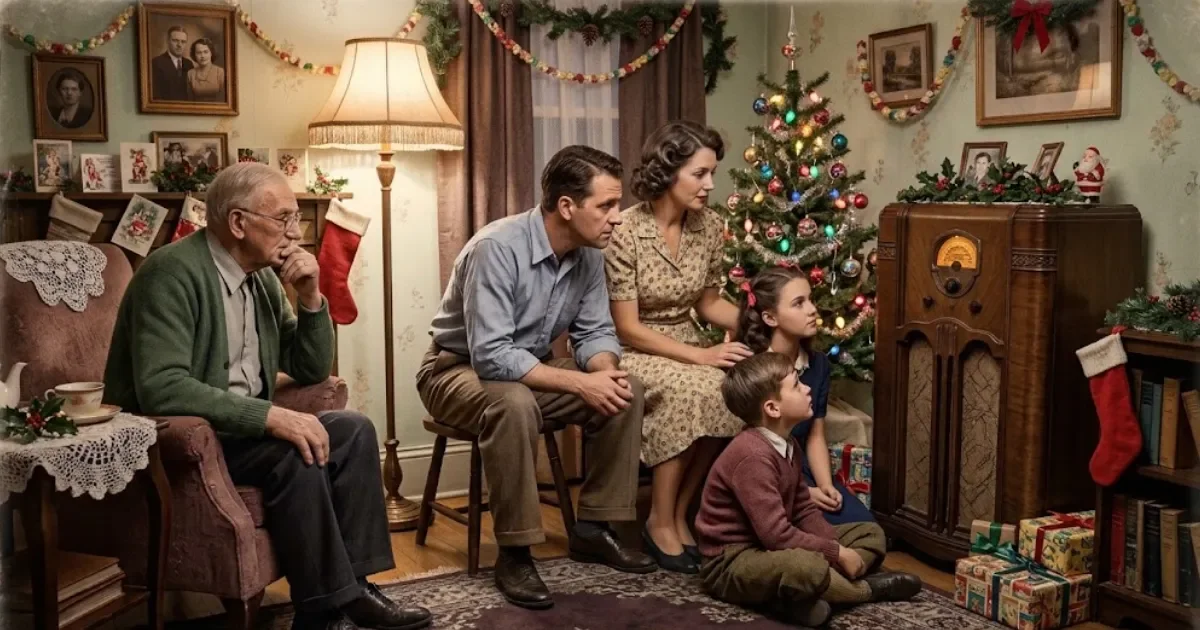
Remember when the whole family gathered around the radio for the Christmas broadcast? (Or at leastwhen your parents told you about it?)
When I was a boy, Christmas was my mom's favorite holiday.
She loved the golden oldies. Bing Crosby most of all.
Every Christmas Eve, we went to Midnight Mass. And on the drive home, the radio played those same songs while my sister and I fell asleep in the car.
I think about those drives every December. So when it came time to plan this year's Christmas concert for the Asheville Senior Chorus, I kept coming back to the radio.
On Monday, December 14, we're turning the Reuter Center into a live radio studio. The station is W-SING, and the show is Stay Tuned: A Christmas Radio Hour.
Why the dial turns
I wanted this concert to travel.
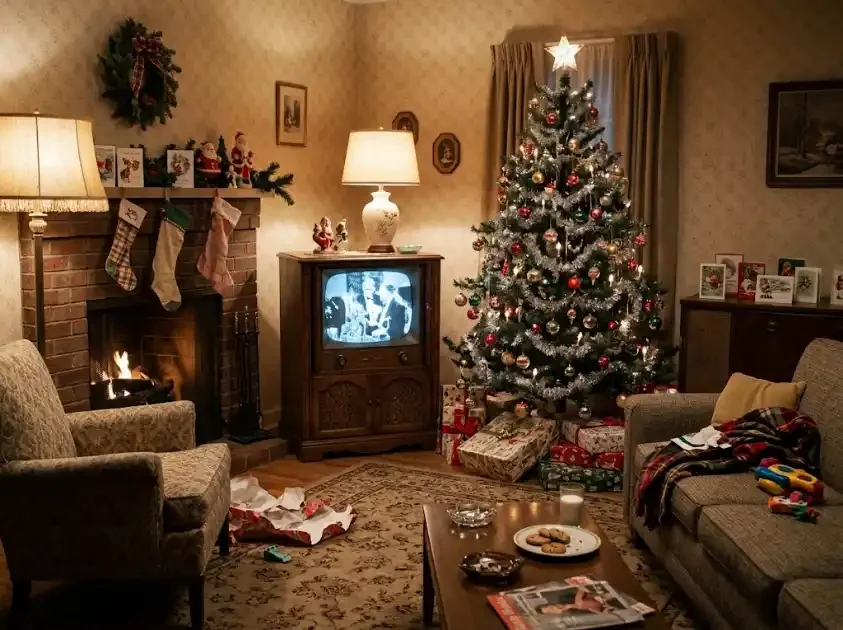
So W-SING signs on in December 1942 and turns the dial forward a few years at a time, all the way to today. Each song shows up around the year radio first played it. You hear the country change through its Christmas music: the war years, the postwar '50s, the night television moved into the living room.
That gives me room for stories. And these songs have great ones.
In 1944, Hugh Martin handed Judy Garland his first lyric for "Have Yourself a Merry Little Christmas." It was so gloomy that she told him that if she sang it, little Margaret O'Brien would cry and the audience would think she was a monster. So he went home and wrote something gentler.
Gene Autry always said he didn't care for "Rudolph the Red-Nosed Reindeer." His wife, Ina, talked him into recording it. It went to number 1.
Back in the '40s, a choir director named Frank Pooler wrote a love song for his sweetheart. The song went nowhere. (So did the romance.) In 1966, he handed the old words to one of his students, Richard Carpenter, who wrote a new tune in about 15 minutes. You know it as "Merry Christmas, Darling."
(That last one gets me. Choir directors keep everything.)
A host, an announcer, and an APPLAUSE sign
Every radio hour needs a host. Ours is Ellen Pappas, and I wrote the script with her in mind. The audience greets her with "Hello, Ellen!" She works alongside an announcer who took the job when the regular fella shipped out with the Navy in '42, and who has no plans to give it back.
Sponsor breaks feature jingles sung by our own chorus members. There's a sound effects table. And there's an APPLAUSE sign, because every studio audience needs a little coaching.
Eric Fricke is at the piano, with bass and drums behind him. Featured soloists from the chorus carry a lot of the night.
A song for Kaye
Halfway through the broadcast, the mood changes. W-SING goes "by special wire" to a candlelit carol service, and the room gets quiet.
That's where we sing "Hanerot Halalu" for Kaye Hand.
Kaye sang alto in this chorus for 18 years. She started as our Secretary and kept volunteering until she was writing our press releases, building our programs, running our website, and keeping our email list. If you asked her anything about rehearsal, she'd tell you, "It's in your EMAIL." (She was right. It always was.)
Kaye died in September. She signed her emails "Shalom Aleichem," peace be with you. "Hanerot Halalu" means "these lights," and it's sung when the Hanukkah candles are lit. This year Hanukkah ends 2 days before our concert.
So we'll sing it for Kaye.
Signing off
We open the broadcast with "White Christmas," and we close with it, too.
At the end of the night, I'll tell the audience about my mom and those drives home from Midnight Mass. Then we'll hand them the song.
That one's for every car full of sleepy kids, heading home with the radio on.
I hope you'll be in the studio audience. Bring someone you used to ride home with.
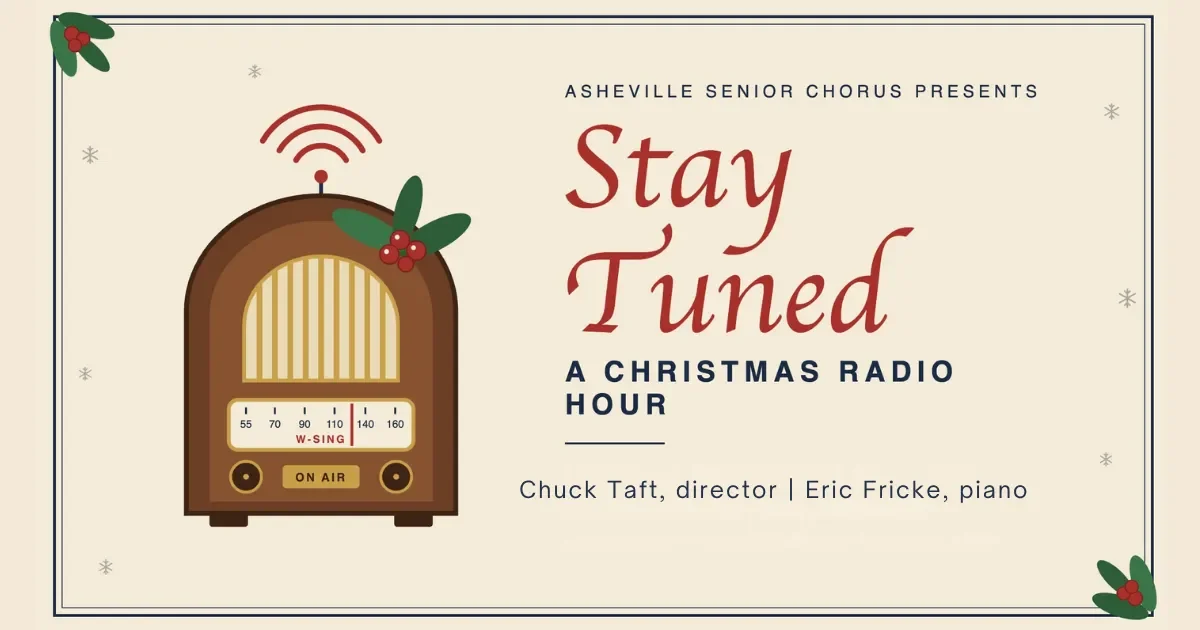
Stay Tuned: A Christmas Radio Hour
Monday, December 14, 2026, 7:00 PM
Reuter Center, UNC Asheville
300 Campus View Road, Asheville, NC 28804
Free admission. Free parking after 5 PM with a UNCA visitor permit.